
Losing a single tooth can affect much more than your appearance. Even if the missing tooth is not visible when you smile, it can influence the way you chew, speak, and maintain your overall oral health. Fortunately, modern dentistry offers several tooth replacement options, and one of the most reliable solutions is a single tooth implant.
If you have been wondering whether a single tooth implant is the right treatment for your situation, this guide explains everything you need to know. From how the procedure works to the benefits, recovery process, and long,term care, you’ll gain a complete understanding of why dental implants are considered the gold standard for replacing missing teeth.
At Brady & Tiller Family and Cosmetic Dentistry in Charlotte, NC, patients receive personalized evaluations to determine whether a dental implant is the most appropriate solution for restoring their smiles while protecting their long,term oral health.
What Is a Single Tooth Implant?
A single tooth implant is a permanent tooth replacement designed to restore one missing tooth without affecting the neighboring teeth.
Unlike a traditional dental bridge, which relies on adjacent teeth for support, a dental implant replaces both the tooth root and the visible crown.
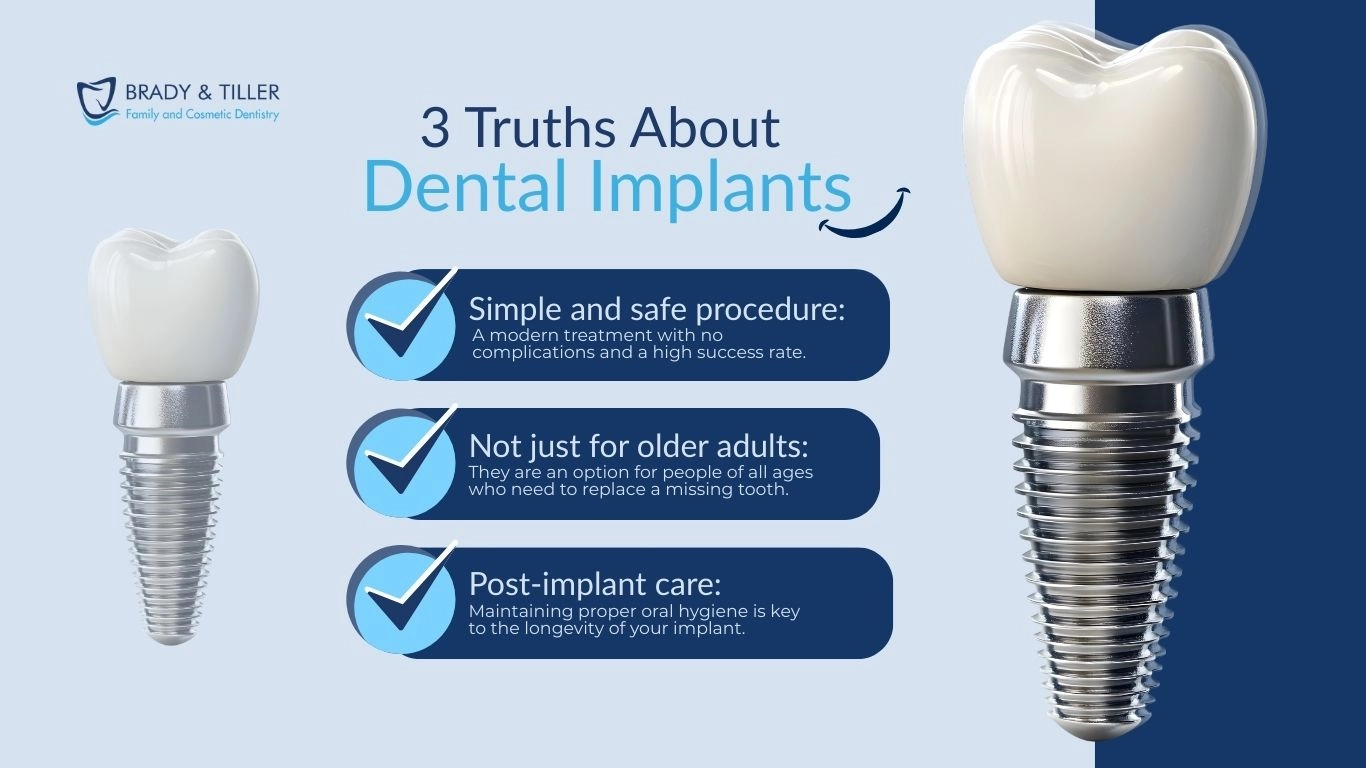
A complete single tooth implant consists of three parts:
The Dental Implant
The implant is a small titanium or ceramic post surgically placed into the jawbone. It functions like the natural root of a tooth.
The Abutment
Once healing is complete, an abutment connects the implant to the custom,made restoration.
The Dental Crown
The final crown is carefully designed to match the size, shape, and color of your surrounding teeth, creating a natural,looking smile.
Together, these components provide a strong, functional, and aesthetically pleasing replacement for a missing tooth.
Why Replacing One Missing Tooth Matters
Some people assume that losing just one tooth is not a major concern, especially if it is located toward the back of the mouth. However, even one missing tooth can create several oral health problems over time.
Without a replacement:
- Adjacent teeth may begin shifting.
- Opposing teeth can over,erupt.
- Bone loss begins in the area where the tooth root once existed.
- Your bite may become uneven.
- Chewing efficiency decreases.
- Speech may be affected depending on the missing tooth’s location.
Replacing the missing tooth early helps preserve both oral function and facial structure.
Why Dental Implants Are Often Considered the Best Option
A single tooth implant offers advantages that many other tooth replacement methods cannot provide.
Preserves Jawbone Health
Natural tooth roots stimulate the jawbone whenever you chew. Once a tooth is lost, this stimulation disappears, causing gradual bone resorption.
Dental implants mimic natural tooth roots by transferring chewing forces into the jawbone, helping maintain bone density.
Protects Healthy Teeth
Unlike traditional bridges, implants do not require healthy neighboring teeth to be reshaped.
This conservative approach preserves your natural tooth structure for the future.
Natural Appearance
Modern implant crowns are individually crafted to blend seamlessly with surrounding teeth.
Most people cannot distinguish an implant,supported crown from a natural tooth.
Long,Term Durability
With proper care, dental implants can last decades, making them one of the longest,lasting restorative treatments available.
Comfortable Function
Because implants are securely anchored into the jawbone, they feel remarkably similar to natural teeth while eating, speaking, and smiling.
Who Is a Good Candidate for a Single Tooth Implant?
Many adults qualify for dental implant treatment, although each patient requires an individual evaluation.
Ideal candidates generally have:
- One missing tooth
- Healthy gums
- Adequate jawbone volume
- Good overall health
- Commitment to maintaining oral hygiene
Even patients who have experienced some bone loss may still qualify after bone grafting procedures.
Your dentist will evaluate your oral health using digital imaging and clinical examinations before recommending treatment.
What Happens During the Dental Implant Process?
One reason patients hesitate about implants is uncertainty about the procedure itself. Understanding each stage often makes the process feel much more manageable.
Step One: Comprehensive Consultation
The first appointment includes:
- Complete oral examination
- Digital X,rays
- 3D imaging if needed
- Medical history review
- Personalized treatment planning
The dentist evaluates bone quality, gum health, and implant positioning.
Step Two: Implant Placement
During the surgical appointment, the implant post is carefully inserted into the jawbone.
Local anesthesia keeps the procedure comfortable, and many patients report that implant placement is easier than they expected.
Step Three: Healing and Osseointegration
The body naturally bonds with the implant through a process called osseointegration.
Over several months, the bone grows around the implant, creating exceptional stability.
This healing phase is one of the reasons implants achieve such high long,term success rates.
Step Four: Abutment Placement
Once healing is complete, the abutment is attached to the implant.
This serves as the connector between the implant and the final restoration.
Step Five: Custom Crown Placement
A custom porcelain crown is fabricated to blend naturally with your existing smile.
Once attached, the implant looks and functions like a healthy natural tooth.
How Long Does the Entire Process Take?
Treatment timelines vary depending on each patient’s needs.
Typical treatment includes:
- Consultation and planning
- Implant surgery
- Healing period of approximately three to six months
- Final crown placement
Some patients qualify for immediate temporary restorations, while others require additional healing time.
Your dentist will recommend the safest timeline for your specific case.
Is Getting a Single Tooth Implant Painful?
Many patients are pleasantly surprised by how comfortable implant treatment can be.
Local anesthesia prevents discomfort during surgery, while post,operative soreness is often managed with over,the,counter pain medications.
Most people describe recovery as similar to or easier than a routine tooth extraction.
Mild swelling and tenderness generally improve within a few days.
What Is Recovery Like?
Recovery depends on individual healing and the complexity of treatment.
Most patients can:
- Return to work within one or two days
- Resume light activities quickly
- Eat soft foods initially
- Gradually return to normal eating habits
Following your dentist’s post,operative instructions helps promote successful healing.
How Successful Are Single Tooth Implants?
Dental implants consistently demonstrate success rates above 95% in healthy patients who maintain proper oral hygiene and attend regular dental visits.
Success depends on several factors:
- Good oral hygiene
- Healthy gums
- Avoiding tobacco products
- Routine professional cleanings
- Proper bite alignment
Regular dental checkups help monitor the implant and surrounding tissues for years to come.
How Long Do Single Tooth Implants Last?
One of the greatest benefits of implants is longevity.
The implant itself may last several decades and often remains functional for a lifetime.
The crown may eventually require replacement due to normal wear, but many crowns also provide many years of reliable function.
Excellent oral hygiene significantly contributes to long,term success.
How Do You Care for a Dental Implant?
Implants require care similar to natural teeth.
Daily maintenance includes:
- Brushing twice daily
- Flossing around the implant
- Using recommended cleaning tools if needed
- Visiting your dentist regularly
- Professional cleanings and examinations
Although implants cannot develop cavities, surrounding gum tissue can still develop inflammation if plaque accumulates.
Single Tooth Implant vs Dental Bridge
Many patients compare implants with traditional bridges before making a decision.
Dental Implant
Advantages include:
- Preserves bone
- Protects neighboring teeth
- Long lifespan
- Natural function
- Independent restoration
Dental Bridge
Advantages include:
- Faster treatment
- Lower initial cost
- No surgical procedure
However, bridges require modifying adjacent healthy teeth and do not prevent jawbone loss beneath the missing tooth.
Your dentist can help determine which option best matches your oral health and long,term goals.
How Much Does a Single Tooth Implant Cost?
The cost varies depending on several factors, including:
- Implant materials
- Need for bone grafting
- Complexity of treatment
- Type of restoration
- Geographic location
Although implants often involve a higher initial investment than bridges, many patients consider their longevity and durability to provide excellent long,term value.
Your dental office can provide a personalized treatment estimate after your examination.
Can Older Adults Receive Dental Implants?
Age alone rarely prevents implant treatment.
Many patients in their 60s, 70s, and even 80s successfully receive dental implants.
Overall health, bone quality, and gum condition are generally more important than chronological age.
What Happens If You Wait Too Long?
Delaying treatment after losing a tooth may lead to:
- Progressive bone loss
- Teeth shifting
- Bite changes
- Increased treatment complexity
- Possible need for bone grafting
Seeking evaluation soon after tooth loss often provides the greatest treatment flexibility.
Choosing the Right Dental Implant Provider
Selecting an experienced dental team is an important part of successful treatment.
Look for a provider who offers:
- Comprehensive examinations
- Advanced diagnostic imaging
- Personalized treatment planning
- High,quality restorative materials
- Ongoing follow,up care
At Brady & Tiller Family and Cosmetic Dentistry, located at 11030 Golf Links Dr, Charlotte, NC 28277, patients receive individualized treatment plans focused on restoring healthy, natural,looking smiles with modern restorative techniques.
Final Thoughts
A single tooth implant offers one of the most predictable, durable, and natural,looking ways to replace a missing tooth. Beyond restoring your smile, implants help preserve jawbone health, maintain proper bite alignment, and protect neighboring teeth from unnecessary changes.
Every patient’s situation is unique, so the first step is a comprehensive evaluation to determine the most appropriate treatment option. Whether you’ve recently lost a tooth or have been living with a missing tooth for years, learning about your options can help you make an informed decision for your long,term oral health.
If you’re considering replacing a missing tooth, Brady & Tiller Family and Cosmetic Dentistry welcomes you to schedule a consultation. Visit the office at 11030 Golf Links Dr, Charlotte, NC 28277, or call 704,321,0414 to discuss whether a single tooth implant is the right solution for your smile.
Frequently Asked Questions
1. Is a single tooth implant better than a dental bridge?
For many patients, a single tooth implant offers advantages such as preserving jawbone health, protecting neighboring teeth, and providing a long,lasting solution. The best option depends on your individual oral health and treatment goals.
2. How long does it take for a single tooth implant to heal?
Most implants require approximately three to six months to fully integrate with the jawbone before the final crown is placed, although treatment timelines vary by patient.
3. Can a dental implant look exactly like my natural tooth?
Yes. Modern implant crowns are custom,designed to closely match the color, size, and shape of your surrounding teeth, creating a natural appearance.
4. Do dental implants require special cleaning?
No. Daily brushing, flossing, and routine dental visits are generally sufficient to maintain healthy implants and surrounding gum tissue.
5. What if I have bone loss?
Bone loss does not automatically prevent implant treatment. Many patients qualify after procedures such as bone grafting, depending on their individual evaluation.
6. Are single tooth implants permanent?
The implant itself is designed to be a long,term replacement and may last for decades with proper care, while the crown may eventually require replacement due to normal wear.





Leave A Comment